
Manage your Viewers directly through Cubiko Viewer Settings.
Forgot your password or got a new device? The steps below will help!
Your two-factor authentication is linked to your previous device, so you'll need your practice administrator to reset your 2FA before you can log in. Once reset, you'll be prompted to set it up fresh on your new device.
The sections in this article are:
- Resetting your password when logging in
- Resetting someone else's password
- Resetting someone else's two-factor authentication device
Resetting your password when logging in
On the login page for Cubiko, you are able to reset your password if you have forgotten it or if the link in your welcome email to set up your password for the first time has expired. To do this, please follow these quick and easy steps.
- Go to our Cubiko login page app.cubiko.com.au
- Click on Forgot password?
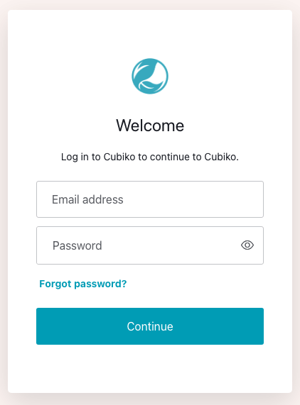
- Enter the email address that you use to log in

- You will receive an email from support@cubiko.com.au automatically.
Please make sure to check your spam or junk folder. If you don't receive the email please check with your IT provider that @cubiko.com.au emails are whitelisted or give our friendly support team a call.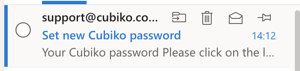
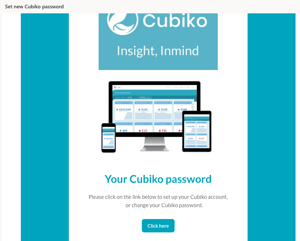
- Click on Click here in the email to reset your password.
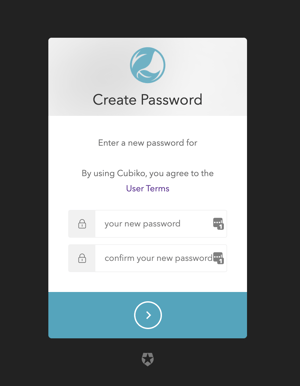
- Enter your new password. Note, your password must contain one Capital letter, one Number (0-9), and an extra symbol (!,@,#,$,%,^,&,*). It cannot contain your name.
📧 Didn't receive a reset email? Make sure to check your spam or junk folder first. If it's still not there, reach out to your practice administrator (usually the practice manager) to confirm that an account has been set up using your email address.
Resetting someone else's password
Through Cubiko's Viewer permissions, you can reset someone else's password if they are in your practice. To navigate to Viewer permissions, go to Cubiko Settings > Viewer Settings.
Click on the email and name of the Viewer in the list you want to reset the password for.
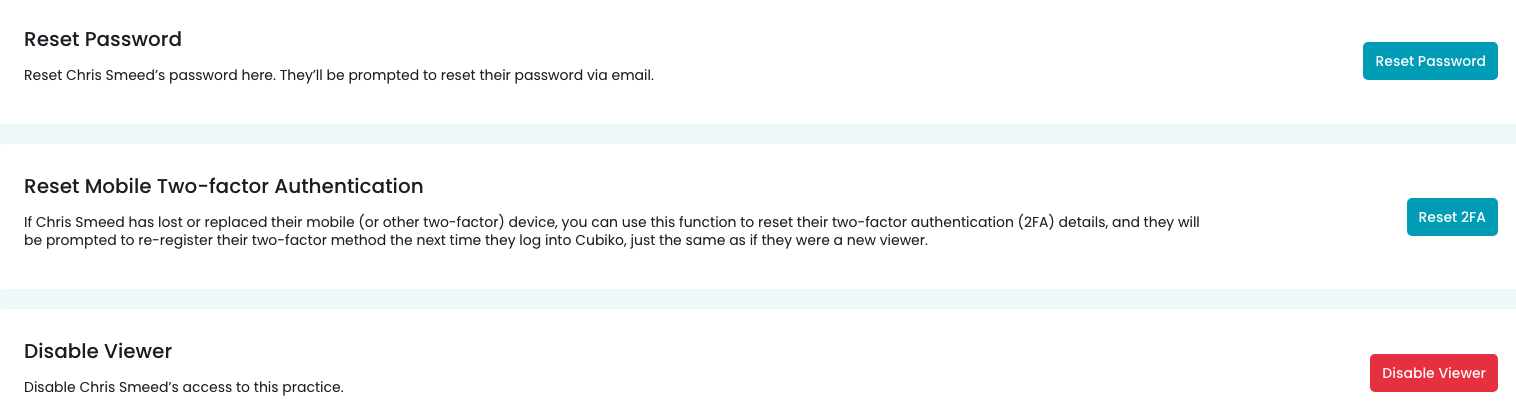
Then click on Reset Password. Once clicked, confirm again that is the Viewer you wish to reset the password of. The Viewer will then receive an email to reset their password.
NOTE: If you need to update the name associated with a common email address in your practice, you can do so in the viewer's setup:
Resetting someone else's two-factor authentication device
Through Cubiko's Viewer permissions feature, you can reset someone else's two-factor authentication if they have access in Cubiko to your practice.
If you need your own two-factor authentication reset, you can ask someone else who has Viewer permission settings in your practice to reset yours for you, following the steps below.
To navigate to Viewer permissions, go to Cubiko Settings > Viewer Settings.
Click on the email and name of the Viewer you want to reset the two-factor authentication of.

Then click on Reset 2FA. Once clicked, confirm again that is the Viewer you wish to reset the two-factor of. The Viewer will then receive an email to reset their two-factor authentication.
🔒 Please note: For the security of your practice data, email cannot be used as your two-factor authentication method. You will need to use an authenticator app (such as Google Authenticator or Microsoft Authenticator) to complete your 2FA setup.
⚠️ Sharing a login? We strongly recommend that each team member has their own individual Cubiko login. Because 2FA can only be set up on one device at a time, sharing a login can cause access issues for your team. If your practice needs to share a login (not recommended), please make sure that the device your 2FA is set up on is a dedicated, shared practice device that is kept secure and accessible to those who need it.